
Depression and anxiety disorders are the most widespread mental health problems in the world, and tens of millions of individuals around the globe struggle with these issues each year. However, while traditional talk therapies and psychopharmacological treatments are extremely effective, not everyone can fully articulate what they are experiencing into verbal expression.
That is precisely where CBT art therapy comes into play. Using the widely recognised principles of CBT in combination with the creative expression of art therapy, clients can express emotions, behaviours, and thoughts more easily and understand them at a deeper level.
What is CBT art therapy?
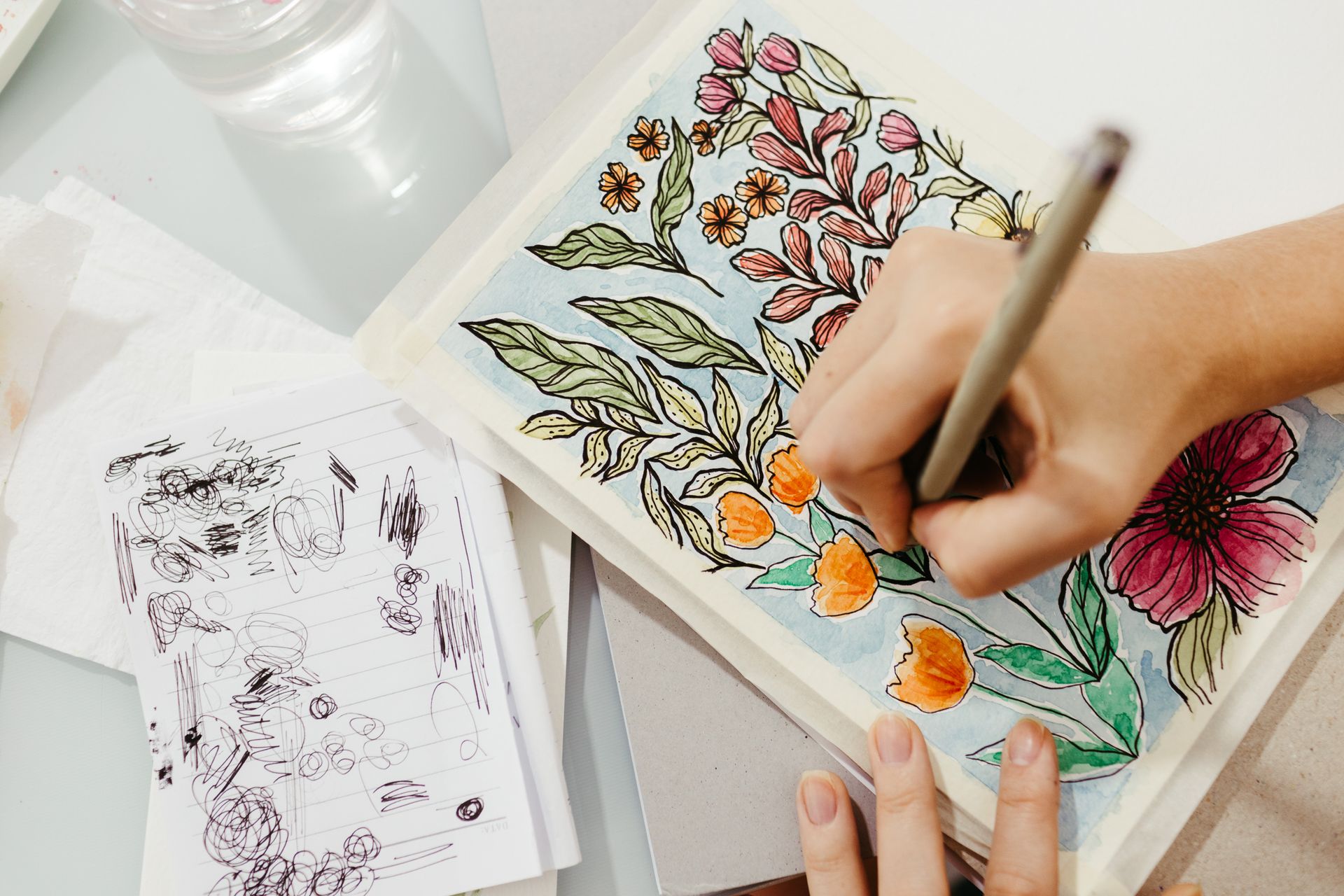
CBT art therapy merges the framework of Cognitive Behavioural Therapy (CBT) with art-making activities including painting, drawing, collage-making, and sculpting. CBT helps to identify, dispute and reframe the irrational, negative thinking which can precipitate depression. Art therapy utilises creative processes as vehicles for self-expression, communication, and processing experiences.
This combined intervention enables clients to give form to thoughts and emotions thereby making patterns more tangible and enabling the formulation of more effective coping mechanisms (Haaland & Landro, 2015). A pervasive characteristic of depression is a predominantly negative cognitive style; negative thoughts, including a negative self-concept and pervasive feelings of helplessness and worthlessness, dominate an individual’s thinking.
Art therapy can help to concretize negative thoughts as individuals project their cognitions into an artistic expression. Once these thoughts are put into visual form they can be looked at more objectively and effectively challenged.
An example could include a drawing of one’s inner critic or painting depictions of one’s negative thoughts; with the use of cognitive restructure the client would be directed to challenge the distorted thoughts (i.e. ‘I am always negative’) and replace them with more rational ones.
The findings of a recent randomised controlled trial study indicated that participants with moderate to severe major depressive disorder, who received art therapy in addition to treatment-as-usual, had significantly greater improvements in depressive symptom severity as compared with the treatment-as-usual alone condition (Lee et al., 2023).
Motivation, behavioural activation and accomplishment can all be facilitated by art-making which is an especially relevant consideration in depression treatment.
How CBT Art Therapy Helps with Anxiety and Depression
Anxiety symptoms often consist of too much worry, cataclysmic predictions, and emotion deregulation. CBT art therapy involves externalising the feelings and fears of anxious individuals in images instead of only verbal means.
Creating images can help make abstract worried feelings and thoughts take more concrete form. A client may be asked to depict his/her anxiety in image form by creating an object, landscape, and/or person. This process may diminish the feel of anxiety and provide opportunities to challenge irrational thinking through CBT methods.
Results from one study that combined CBT with art for treatment of anxiety disorders concluded that panic symptoms, anxiety, and agoraphobia decreased. Artwork also was reported to help patients understand abstract concepts of therapy, and it enabled patients to better monitor their treatment (Haaland & Landro, 2015). The systematic review conducted at the end of this study noted that adults with anxiety were better able to cope when receiving art therapy intervention that targeted expressive and affective qualities (Abbing et al., 2018).
Effectiveness of Art Therapy
CBT art therapy works effectively because it taps into both cognitive and emotional aspects of healing. Whereas traditional CBT helps individuals learn to challenge and modify problematic thoughts and behaviours, art therapy offers a nonverbal way for them to explore emotions that they might find it difficult to put into words.
This is particularly useful for clients who are not verbally skilled in expressing their feelings, who find traditional talk therapy overwhelming, and for clients experiencing constant rumination or worry, as well as those who enjoy and benefit from hands-on activities. It is also useful for those who wish for alternative methods of exploring issues of trauma, depression or anxiety. Art making is a mindful experience in itself, fostering present-moment awareness.
Studies suggest that art interventions lead to decreased feelings of anxiety and depression through improved emotional regulation, self-awareness, and relaxation (Newland & Bettencourt, 2020).
A combination of cognitive and art therapy, CBT art therapy combines proven cognitive strategies with artistic expression. Art therapy combined with CBT can offer a great way for depression and anxiety to be overcome through art therapy by having individuals examine their thoughts, work through their feelings, and develop ways of dealing with their problem that aren’t destructive.
CBT art therapy is not intended to replace formal mental health care, but can be an excellent supplementary option to formal psychotherapy to add creative interest to the process and make the idea more attainable and enjoyable.
References
References
Abbing, A., Ponstein, A., van Hooren, S., de Sonneville, L., Swaab, H., & Baars, E. (2018). The effectiveness of art therapy for anxiety in adults: A systematic review of randomised and non-randomised controlled trials. PLOS ONE, 13(12), e0208716.
Haaland, G. Å., & Landro, N. I. (2015). Should art be integrated into cognitive behavioral therapy for anxiety disorders? The Arts in Psychotherapy, 41(4), 343–352.
Lee, M., Choi, H., Shin, J., & Suh, H.-S. (2023). The effects of adding art therapy to ongoing antidepressant treatment in moderate-to-severe major depressive disorder: A randomized controlled study. International Journal of Environmental Research and Public Health, 20(1), 91.
Newland, P., & Bettencourt, B. A. (2020). Effectiveness of mindfulness-based art therapy for symptoms of anxiety, depression, and fatigue: A systematic review and meta-analysis. Complementary Therapies in Clinical Practice, 41, 101246.
One response
[…] technique often employed by CBT therapists involves using art to help the client externalise their thoughts and emotions. Often with […]