Anxiety can disrupt many aspects of life, from the ability to concentrate and sleep to relationships and overall wellness.
Although traditional therapies like CBT and medication remain helpful for many people, innovative ways of using creative activities to manage anxiety symptoms are becoming more recognised. One creative option is guided drawing practice which uses the simple but powerful act of creating art to support the process of self-discovery, mindfulness, and emotional regulation.
A guided drawing activity typically involves the participants creating art based on particular prompts or directions given to them in a therapeutic setting. The art activity is not evaluated on skill or whether there is a finished, masterpiece artwork.In this type of art exercise, it is less about the final result and more about expressing feelings, thoughts, and emotions within a safe and non-critical context.
How Guided Drawing Is Used to Help Reduce Anxiety
Anxiety often comes with too much worry, too much racing thoughts and often to worry about future possibilities. Guided drawing will offer some help to get rid of those anxious thoughts by making them focus to the present. Concentrating on shapes, lines, texture and movements can have the same effect as meditation.
It has been proven that engaging in creative activity can diminish the level of stress and also increase the emotional regulation. It was found in a research on creative art intervention that creative arts activity showed a significant relationship with lowering level of anxiety and increasing well-being. (Abbing et al., 2018)
Furthermore, drawing can also function as non-verbal expression for emotions that people are unable to describe in words. So many people find it so difficult to express feelings of fear, overwhelming or uncertainty. Guided drawing can help these people to visualize such emotions so that they understand better their experience.
The Connection Between Drawing and Mindfulness
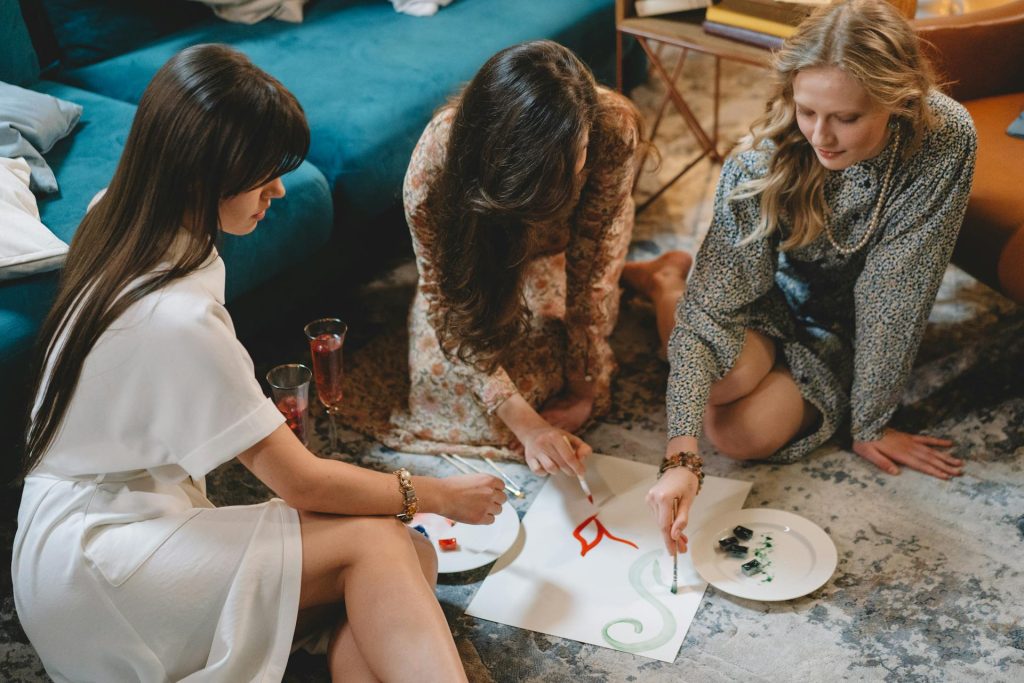
Mindfulness is defined as paying attention to the here and now without judgement. Guided drawing naturally promotes the present moment focus by redirecting attention to the process of drawing itself, rather than to preoccupying thoughts or worries.
As people immerse themselves in the drawing process, their usual mental chatter can become significantly quieter, or the person may even find themselves in a “flow state” which means their attention is completely consumed by the act of drawing.
Studies on mindfulness-based art interventions suggest that these practices can improve symptoms of anxiety and stress, as most participants reported feeling more calm, centred, and able to regulate intense emotion after their activity (Newland & Bettencourt, 2020).
1. Draw Your Anxiety
A frequent therapeutic exercise where you’re asked to visualise anxiety as an object, character, or symbol (e.g., a storm cloud, a tangled knot, a noisy creature). After completing this, you’re asked reflective questions like: What does this drawing mean to you? How much room does this drawing take up in my life? What could make the drawing seem smaller and less threatening? Drawing anxiety can externalise anxious thoughts so they don’t feel as overwhelming.
2. Create a Safe Place Drawing
This involves asking someone to draw an image of a safe place where they feel calm, safe, and comfortable. This can be a real location, a memory of a place or an imagined place. The goal is to access and evoke the feeling of safety and calm, and it can later be accessed again when feeling overwhelmed.
3. Draw a Worry Container
In this technique, people are asked to draw a box, jar, or other container where they can put their worries. Then, participants can draw or write individual worries inside the box or jar. This activity helps people gain psychological distance from anxious thoughts and maintain healthy boundaries around their emotions.
4. Mandala Drawing
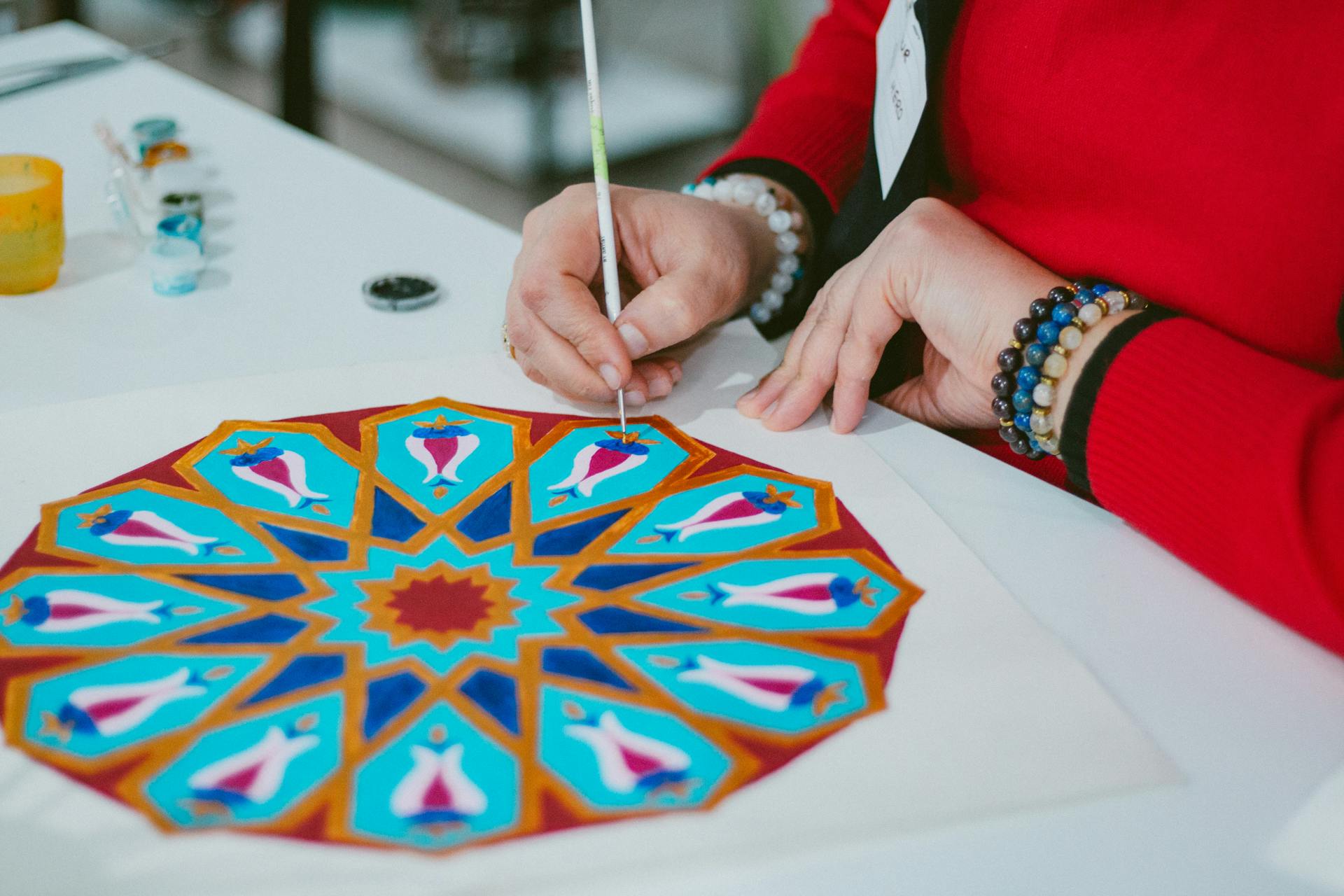
Mandalas are circular designs commonly used in therapy and mindfulness. Both drawing and colouring mandalas can promote relaxation and focus. Studies show that colouring a structured pattern, such as a mandala, can decrease anxiety levels and increase positive mood through encouraging focused attention and reducing rumination (Van der Vennet & Serice, 2012).
The Connection Between Drawing and Mindfulness
Guided drawing is a self-care technique and not meant as a replacement for treatment with a mental health professional. Those who are experiencing debilitating anxiety which impacts daily functioning should consider talking to a licensed mental health care professional.
Many therapists will use guided drawing along with other creative approaches to therapy with clients whom have trouble expressing themselves with traditional talk therapy. Along with evidence-based treatments like CBT, guided drawing could be a very effective tool to understand and cope with anxiety.
For some, the stress relief offered by guided drawing exercises provides an innovative and engaging approach to working through anxiety. When focused on mindfulness, expression, and reflection, these practices allow us to come to know our inner lives while alleviating the burden of worry.
Whether used on one’s own or within a therapeutic setting, the power of a pencil and paper shows us that managing our anxieties is not solely dependent on language.
References
Abbing, A., Ponstein, A., van Hooren, S., de Sonneville, L., Swaab, H., & Baars, E. (2018). The effectiveness of art therapy for anxiety in adults: A systematic review of randomised and non-randomised controlled trials. PLOS ONE, 13(12), e0208716.
Newland, P., & Bettencourt, B. A. (2020). Effectiveness of mindfulness-based art therapy for symptoms of anxiety, depression, and fatigue: A systematic review and meta-analysis. Complementary Therapies in Clinical Practice, 41, 101246.
Van der Vennet, R., & Serice, S. (2012). Can coloring mandalas reduce anxiety? A replication study. Art Therapy: Journal of the American Art Therapy Association, 29(2), 87–92.
One response
[…] powerful CBT technique is to look for evidence. When anxious or depressed, people do not question if their thoughts are […]